Momiji Magic: Growing Japanese Maples in Pots
Introduction
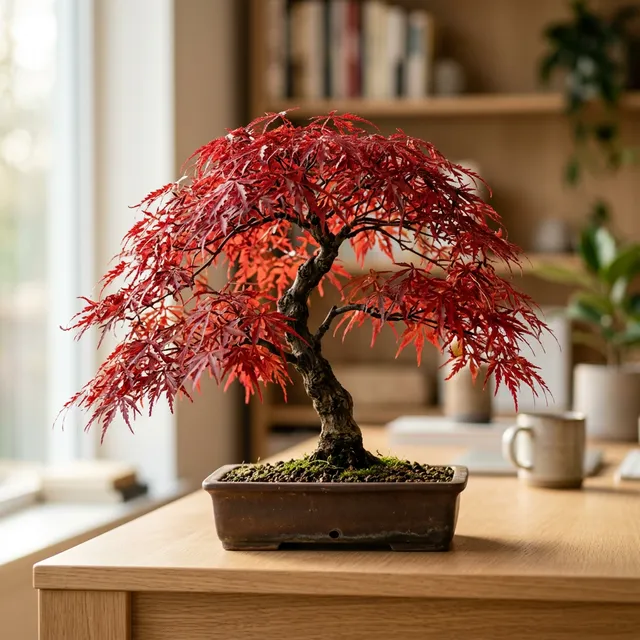
Here is the ugly truth about your modern aesthetic obsessions. You desperately want the profound beauty of nature, but you demand it be permanently stationed on your sterile, climate-controlled office desk. You want the miniature Zen tree aesthetic. You want a vibrant, delicate Momiji—the revered Japanese maple—trapped in your restricted personal space.
I understand the impulse. They are arguably the most architecturally interesting trees on earth. They represent decades of brutal horticultural refinement.
But listen to me: Acer palmatum is a temperate, deciduous tree. It is biologically tethered to the harsh, changing realities of the seasons. It is not a cheap, disposable tropical houseplant you grab at a big-box hardware store. Treating it like one guarantees its rapid, miserable death. Cultivating a Japanese maple in pots is absolutely possible, and the results can be spectacular, but only if you immediately abandon the fantasy of low-maintenance indoor greenery.
If you want success with container cultivation, you need a ruthless commitment to biological reality. You must select highly specific dwarf cultivars. Be prepared: a quality, grafted dwarf specimen is a premium investment, often starting well over $100. You must engineer a precise soil matrix that actively prevents suffocation. And you must forcefully replicate a harsh winter dormancy break. Stop inadvertently killing trees. Start practicing real, disciplined horticulture. Here is exactly how you keep a piece of the autumn forest alive in a small container.
Section One: Choosing the Right Tree: Dwarf and Bonsai Cultivars
Stop trying to cram massive landscape maples into small patio planters. Standard varieties of Acer palmatum are genetically programmed to become sprawling, twenty-foot canopy trees. When confined to a container, their aggressive roots immediately circle the pot in a desperate search for space. The tree quickly becomes root-bound, physiologically stressed, and highly vulnerable to catastrophic disease. The single most critical factor for your long-term success is accepting this spatial reality. Focus your efforts exclusively on specialized dwarf japanese maple varieties.
If you want container gardening trees that won’t require a constant fight against their own nature, you must select cultivars deliberately bred for restricted growth. These are the premier choices you should be looking for:
| Cultivar | Characteristics | Growth Rate / Habit | Ideal Container Aesthetic |
|---|---|---|---|
| Mikawa yatsubusa | Unique, sculptural, naturally shingled leaves; incredibly short internodes | Glacial (4-6 inches per year) | Undisputed king of container maples; builds its own character |
| Crimson Queen | Classic fiery red, deeply lobed, lace-leaf (dissectum) foliage | Low-branching, cascading | Absolute perfect centerpiece for a wide, shallow, unglazed ceramic container |
| Sango-Kaku | Striking, vibrant coral-red branches; provides essential winter visual interest | Upright, structural | Embodies the Japanese concept of shibui (understated beauty) during bleak winter months |
| Koto no ito | ”Harp Strings”; exceptionally delicate, soft, strap-leaf texture | Graceful, delicate | Masterpiece of subtlety; perfect for close-up viewing on a shaded patio or executive desk |
When you choose these slow-growing trees, you are working harmoniously with the plant’s genetics. Do not fight a losing battle against them. For those interested in the broader context of miniature landscapes, understanding the principles of Saikei and Bonkei can further inform your container design choices.
Section Two: The Container Substrate: Soil and Drainage
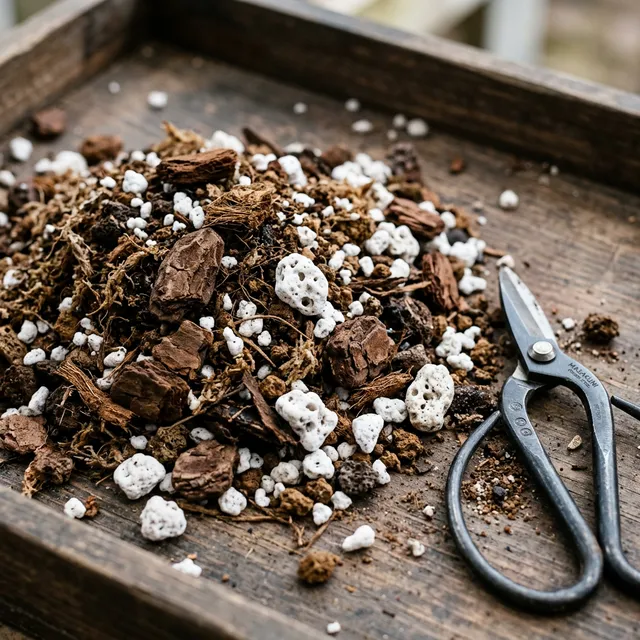
A professional-grade soil matrix for Japanese maples: 80% pine bark, 15% peat moss, and 5% perlite ensures rapid drainage and vital oxygenation.
Let us talk about the number one killer of potted maples. “Wet feet.” This is a polite, folksy horticultural term for systematically suffocating your expensive tree in a swamp of its own rot. Persistently soggy, compacted potting soil deprives the sensitive root system of vital oxygen. It invites devastating fungal infections like Phytophthora during high summer heat and Pseudomonas in the bitter cold. If you use standard, heavy indoor potting mixes loaded with moisture-retaining gels or cheap compost, your tree is already dead. It just hasn’t dropped its leaves yet.
You need the best soil mix for Japanese maples in pots. Frankly, it is not soil at all. It is a carefully engineered substrate matrix designed specifically for rapid drainage and slight acidity (pH 5.5 to 6.5). The professional-grade nursery recipe is uncompromising: 80 percent composted pine bark, 15 percent peat moss, and 5 percent perlite.
Here is exactly why this specific ratio works. The chunky, irregular pine bark mimics the airy, detritus-rich woodland floor where maples naturally evolve. It ensures that heavy water flushes through the pot immediately, creating a vacuum that pulls fresh, life-giving oxygen down into the root zone. The peat moss retains just enough trace moisture to sustain the tree without inducing rot, while naturally buffering the required acidic pH. The perlite prevents long-term compaction. However, because this entire matrix is completely sterile and devoid of organic topsoil, you must supply all vital nutrients via a slow-release, low-nitrogen organic fertilizer applied only in early spring.
Warning: Never place a water-catching saucer beneath your container. Leaving a maple pot sitting in drained water effectively drowns the lower root system. You are creating an anaerobic environment that guarantees the rapid onset of fatal root rot. Elevate the pot on structural feet and let it drain completely onto the ground.
Your hydration mechanics must be equally disciplined. Container maples rely entirely on you for water, but they absolutely do not want to be watered on a rigid schedule. Employ the saturation and drying cycle, commonly known by experts as the “finger test.” Water the tree heavily until liquid pours freely from the multiple drainage holes at the bottom of the pot. Then, walk away. Do not water it again until the top inch of the substrate feels entirely dry to the bare touch. This deliberate cycle of drought and flooding forces the roots to actively seek out moisture deeper in the container. It builds a robust, fibrous root system.
Section Three: The Indoor Myth and the Importance of Winter Dormancy

Manually simulating winter: a dormant Japanese maple requires 90 days of consistent temperatures between 38°F and 50°F to reset its biological clock.
If your primary concern is indoor maple care, prepare yourself for a harsh biological lesson. The most pervasive, damaging myth in modern container gardening is the naive belief that you can keep a temperate deciduous tree on your living room desk year-round simply because it looks nice. You cannot.
Acer palmatum operates on an ancient internal biological clock governed by strictly dropping temperatures and shortening daylight hours. It absolutely requires a minimum number of “chill hours” to shut down, rest, and reset its vital metabolic processes. If you keep a Japanese maple in a 72-degree, climate-controlled room indefinitely, it will eventually exhaust its stored energy reserves. It might look perfectly fine for a year. But it will inevitably fail to push new growth the following spring, slowly wither, and die. It needs the freezing cold just as much as it needs the spring sun.
So, the critical question: how to keep a Japanese maple indoors? The blunt answer is that you don’t. You keep it indoors for three seasons, and then you manually simulate a harsh winter.
For desktop enthusiasts and those practicing small-scale container horticulture, this means deliberately executing an artificial dormancy hack. When late autumn arrives and the tree drops its final, fiery leaves, you must immediately relocate it to a cold, dark environment. An unheated, detached garage is usually ideal. A specialized cold frame outdoors works exceptionally well. If you are truly dedicated and live in a high-rise apartment, a dedicated mini-fridge or a spare, unsealed refrigerator crisping drawer (never store plants with active produce, which emits ripening gas) is a perfectly viable, scientifically sound alternative.
Crucial Note: The dormant tree must be maintained at consistent temperatures strictly between 38 and 50 degrees Fahrenheit for a duration of exactly 90 days.
During this forced, artificial winter, remember that a dormant tree is sleeping, not dead. The fragile root system can still easily freeze-dry in cold storage, which is just as fatal as root rot. Your winter watering routine changes drastically. The soil must be kept only slightly damp to prevent total desiccation, but it must never be saturated. Check it every few weeks. Water lightly only when the substrate is completely dry to the touch. Once the mandatory 90 days have passed, slowly reintroduce the tree to warmth and indirect light. It will reward you with a vigorous, healthy spring flush.
Section Four: Maintenance: Pruning for Shape and Root Health
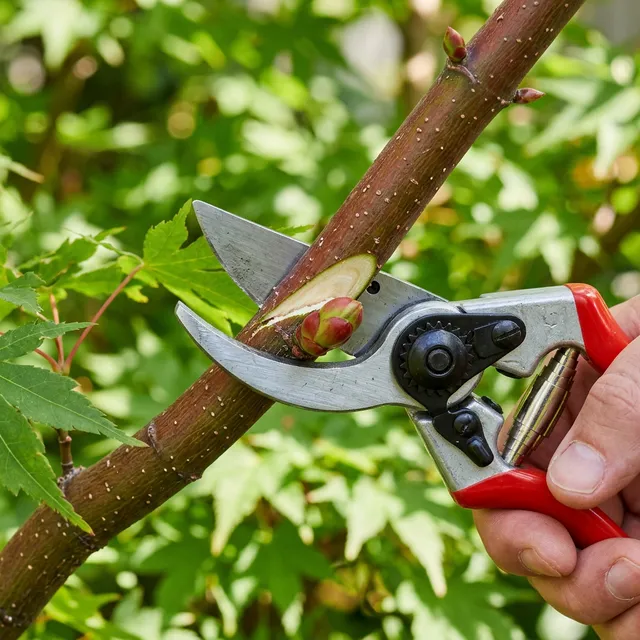
Pruning for longevity: always use sterilized bypass shears to make 45-degree cuts just above the branch collar, removing no more than 20% of the canopy per season.
To maintain a tree in a proportionally accurate state relative to a small container over the course of decades, you cannot be a passive observer. You must intervene. Both the above-ground canopy and the subterranean root system require calculated, sterile violence to ensure survival. If you are applying the concepts of Ma (negative space), precise pruning is how you achieve it.
Canopy pruning is not about indiscriminate hacking. It is an architectural refinement best performed in late winter or early spring, just before the buds break and push new leaves. This precise timing allows you to clearly see the bare, skeletal structure of the tree. Using sterilized, sharp bypass pruners, make precise 45-degree angle cuts just above a visible branch collar. Never leave blunt stubs; they simply die back and invite rot and disease directly into the heartwood. Focus your efforts entirely on removing dead wood, eliminating branches that cross and rub against each other, and thinning out dense, twiggy interior growth. This vital practice dramatically improves interior airflow, preventing powdery mildew, and channels the tree’s vigor directly into the primary structural branches.
Pro Tip: Never remove more than 20 percent of the tree’s total foliage or branch structure in a single season. Exceeding this strict limit will send the plant into severe systemic shock.
Equally critical, and far more terrifying for beginners, is the hidden art of root pruning. A tree cannot live indefinitely in a confined space without eventually strangling itself. Every three years, during the late winter dormancy period, you must gently extract the dormant tree from its pot. Observe the root system. If you see a dense mat thickly circling the interior perimeter, act decisively. Using a root hook, first gently comb out the dense mat circling the interior perimeter. Once untangled, use specialized, sharp root shears to precisely trim away approximately 25 percent—one-quarter—of the outer and lower root mass. Yes, it feels brutal. But it prevents self-strangulation, allows you to repot the tree back into the exact same container with fresh soil matrix, and mathematically ensures its long-term health.
Cultivating an Acer palmatum bonsai or potted maple is not a casual weekend hobby. It forces you to confront the absolute reality of the plant’s biological needs rather than lazily imposing your own aesthetic convenience upon it. Stop looking for easy shortcuts, put in the necessary, unglamorous work, and you can truly capture the real magic of Momiji in miniature.